

A brand is an association of meanings created in the mind of the consumer that generates preference towards our product or service. To sum it up, branding makes our client have a superior value perception of our product or service when compared to the competition.
Brands are created and maintained, they don’t “happen” by accident. We have to use branding, create a business, differentiate ourselves from the competition, maintain our positioning and then we can grow.
But, are we paying attention to the architecture of our brand?
Later on, you’ll discover what it is, what kinds exist (monolithic, endorsed, independent, and hybrid), see some examples, and understand the advantages and disadvantages of each kind to know which your organization needs.
Some organizations that have more than one brand (a portfolio of brands) express their business, logistical, and governance structure through their brand architecture: the description of how they create identity and value through all their brands.
The architecture shows all the brands and sub-brands, their relationships, the role of each, and their value:
Brand architecture is a strategic tool that allows us to organize the value that our business creates so that the market properly understands us and makes the best buying decisions.
It allows us to intentionally create value because we can efficiently organize the business in a way that better assigns resources, processes, and investment towards initiatives that provide value.
Our audiences will better understand our offering, available options, and have increased trust in us. A clear and well-communicated architecture presents us as an organization that evolves and adapts to new situations.
Brand architecture is expression, the visible face of the business strategy:
Brand architecture is the tool that will allow your organization to speed up business growth, focusing your activities on those that provide value to achieve a greater return on investment.
The clearer your architecture is, the more order, direction, and purpose your organization will have. Internal decision making will be easier:
Today’s consumers connect with brands in a new way. Thanks to technology and social media, we can learn more about brands, their decisions, and their values, as well as the experiences of other consumers.
The decision (and buying) decision making processes are more flexible; it’s best if your brand or brands simply communicate the value that it provides.
Don’t miss out! In addition to these reasons, there are four strategic business decisions that owe their success to the brand strategy chosen by the organization.
Flexibility doesn’t interest you; bet on focusing all your efforts on messages, creating consistency and cohesion in all brand expressions. Applying the same brand for all public goals offers you the economy of scale.
Any change in a sub-brand will affect the rest. On the other hand, the mother brand is a great advocate for all the sub-brands, providing notoriety and credibility.
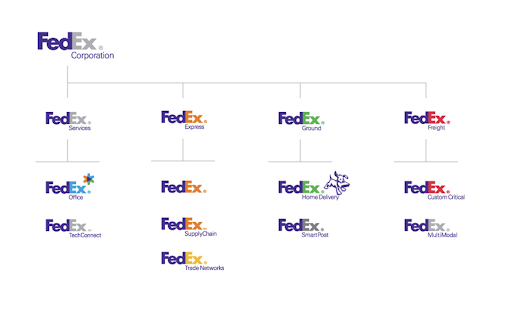
If you have very specialized buyer personas, even if they are buying the same product, you can’t address them from the same brand.
This happens regularly when you work in the B2C area and in sectors with high activity. Segmentation is more pronounced and value proposals must be more specific to connect more intensely with the target audience.
Brands forego possible synergies but are completely adapted to each niche.

As long as you’re not working with companies that can endanger your territory or even question the mother brand, this architecture (with a weak or strong endorsement, according to the proximity of the brand and in function of the existing grade of interrelation) offers you the opportunity to stretch brand elasticity to reach new market areas.
Enjoy the reach of the mother brand, maintaining a structure that brings coherence to the entire family of sub-brands, in exchange for sacrificing some versatility when it comes to placing different sub-brands in very different market niches.
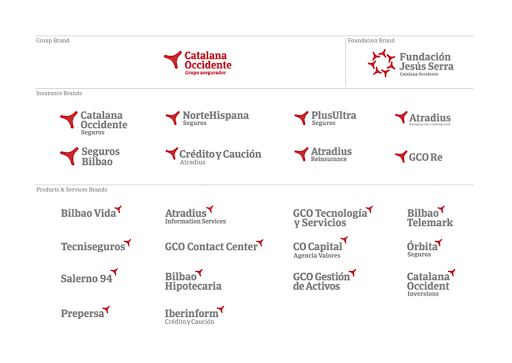
Various architecture models are used simultaneously in different business lines.
It can be a transitional model or a necessary response from the organization to adapt itself to technological impacts or market transformations.
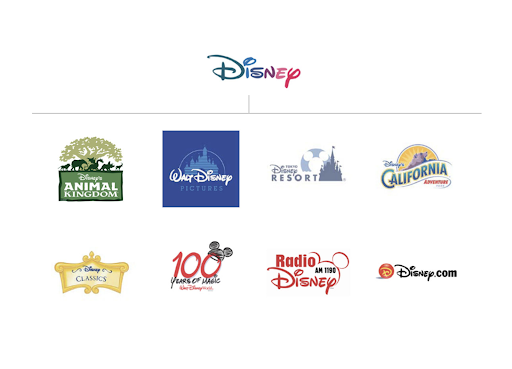
Brands will lose some coherency, but they will have complete versatility to address different sectors:
Presenting a firm and understandable brand architecture to the public is imperative if we want to communicate from a solid base.
Through the correct architecture, we can better take on future changes without losing coherency and facilitate brand implementation.
Throughout time, different architecture models have been created according to brand needs. In this article, we explored the main ones.