

Take your business to new heights in organization and efficiency. We provide you with the key steps to plan projects with Akeneo in your ecommerce store. Everything you need to know about integrating a PIM into your business and what to expect throughout the process.
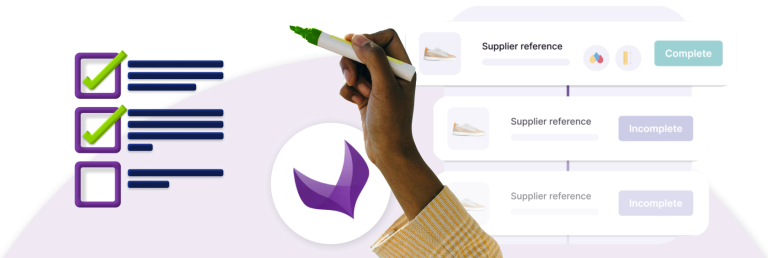
A Product Information Management solution is an enterprise system that serves as a centralized hub for collecting, storing, and managing your product information on your eCommerce platform. It’s also the primary location for creating a catalog for subsequent distribution across your sales and eCommerce channels.
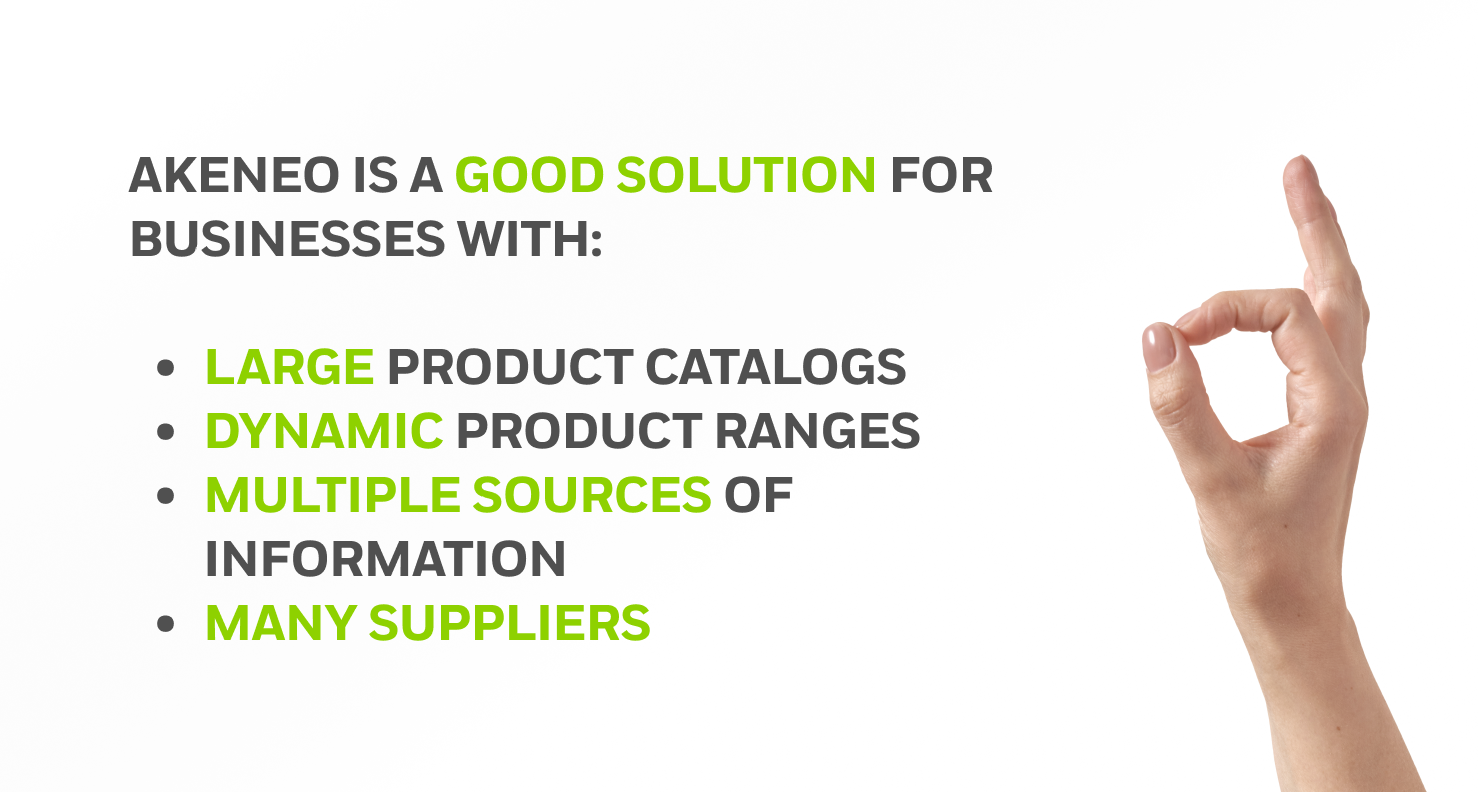
A PIM tool streamlines and expedites the creation and delivery of engaging product experiences that will drive your business growth. It’s an invaluable solution for companies with extensive product catalogs, dynamic ranges, multiple sources of product data, and numerous suppliers.
Though there are many options in the market for PIM and product organization tools, Akeneo stands out by taking it a step further with its extensive set of features and connectivity.
Thanks to its Web API, Akeneo can seamlessly connect with other systems already in use in your company that provide product information, such as an ERP (Enterprise Resource Planning) or specific applications for certain clients. Not to mention the numerous features it offers, which streamline tasks related to enriching and distributing product information to your buyers. It is, without a doubt, one of the most powerful PIM solutions available today.
Shopping experiences vary across channels, but they all share a common denominator: the quality of product information. When consumers make online purchases, they place greater trust in brands and sellers that provide comprehensive, accurate, and original data. Conversely, they are less likely to trust products that lack such information.
Have you ever abandoned an online store due to insufficient product information or poor-quality photos? Perhaps you couldn’t find an appliance that matched your kitchen’s exact dimensions, leading you to think, «I’ll look elsewhere». Or were you disappointed upon opening a package after weeks of anticipation, only to find a product that didn’t meet your expectations?
Inadequate or insufficient product information is one of the most common causes of shopping cart abandonment and high return rates. Here is what Google has found out during their research:

Also, the quality of your eCommerce product catalog affects two important areas of digital commerce:

Any eCommerce company managing a large product database benefits from using PIM software. Not only does it reduce the number of manual processes for product and inventory management, but it also eliminates nearly all potential errors or inaccuracies when entering product data.
It goes without saying that constant task repetition can lead to errors. These errors not only affect product accuracy but also lead to misunderstandings in communication with your buyers. This results in typos in areas such as product type, size, and delivery time, to name just a few. And as we know, logistics delays are closely monitored in today’s times. All these areas begin to suffer as a result of not knowing what an eCommerce PIM software is and the overall positive impact it has on eCommerce businesses.
Regardless of size, seeking new and better ways to optimize communication and enhance links between departments is another essential step for the smooth operation of a company. Once a certain scale has been reached, these improvements become mandatory rather than simply something nice to implement.
If your business is already large enough, adding a PIM component becomes more than just an enhancement; it’s essential for online stores aiming to build an omnichannel and/or multi-regional business.
If you’re just starting out, benefit from streamlined processes and faster growth by implementing a PIM program for your store. Consider using an ERP system as a way to connect marketing and sales departments with all other areas responsible for product information.

Akeneo comes in three different editions, one free and two paid : Community, Growth, and Enterprise. In that order, each edition contains the benefits of the previous one plus its own new and exciting set of characteristics and capabilities.
The features of the Community edition enable your team to:
The free edition is relatively easy to install and run on premise (we offer this service), though hosting is at customer’s expense.
The Growth edition includes the same features as the Community edition and adds:
In this version, Akeneo offers hosting services with an annual subscription fee.
The Enterprise edition includes the same features as the Growth edition and adds:
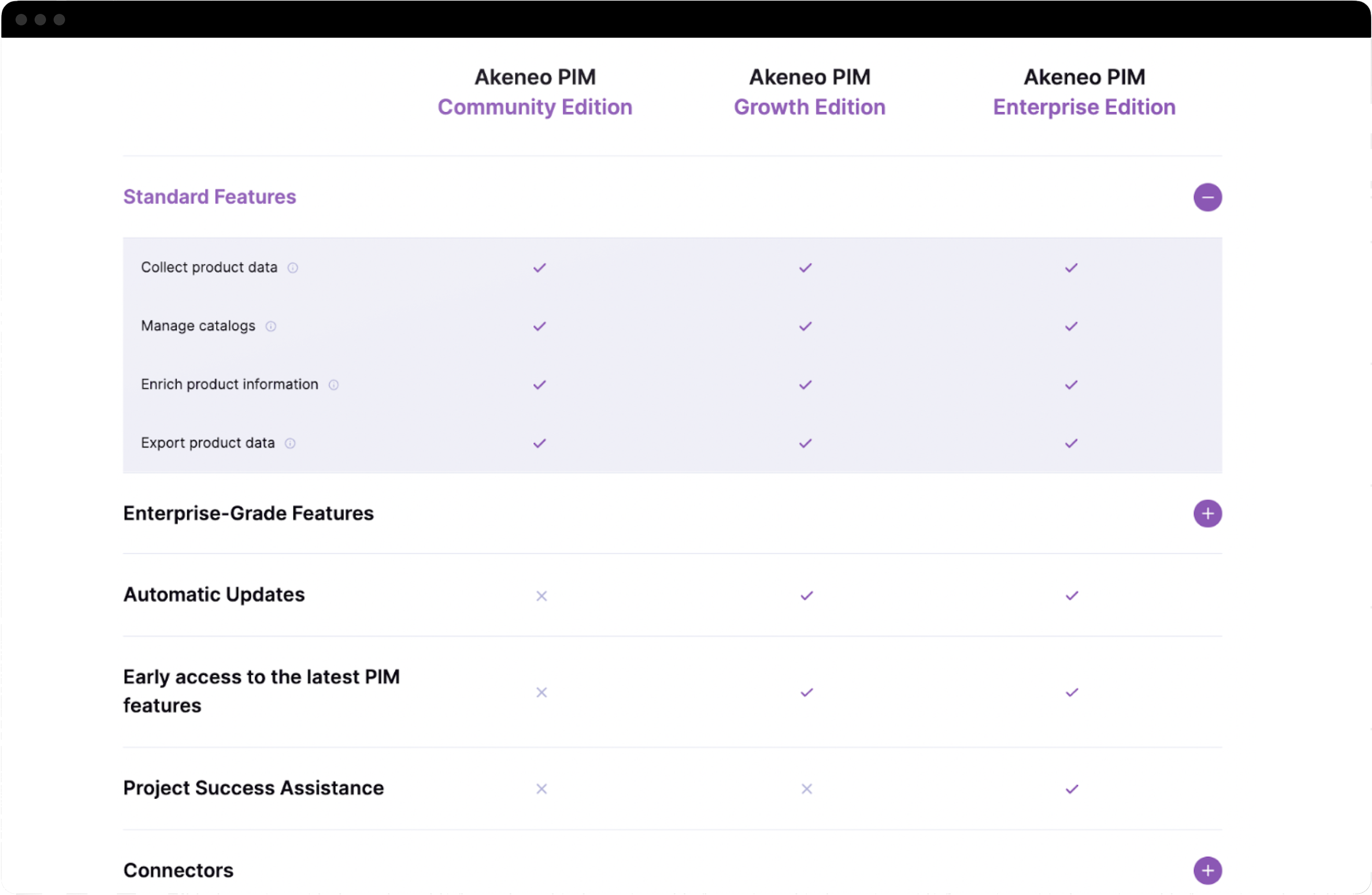
Deployment model follows SaaS/PaaS, and the price is paid in an annual subscription fee.
For more information, visit the official Akeneo page where the editions are compared and detailed at http://akeneo.com/compare-editions

As we’ve seen in recent years, every online business has unique growth needs and operational processes, and there’s no one-size-fits-all standard procedure that applies to all merchants. Drawing from our experience in implementing PIM systems with Akeneo, we can confirm that the majority of them require the following steps.
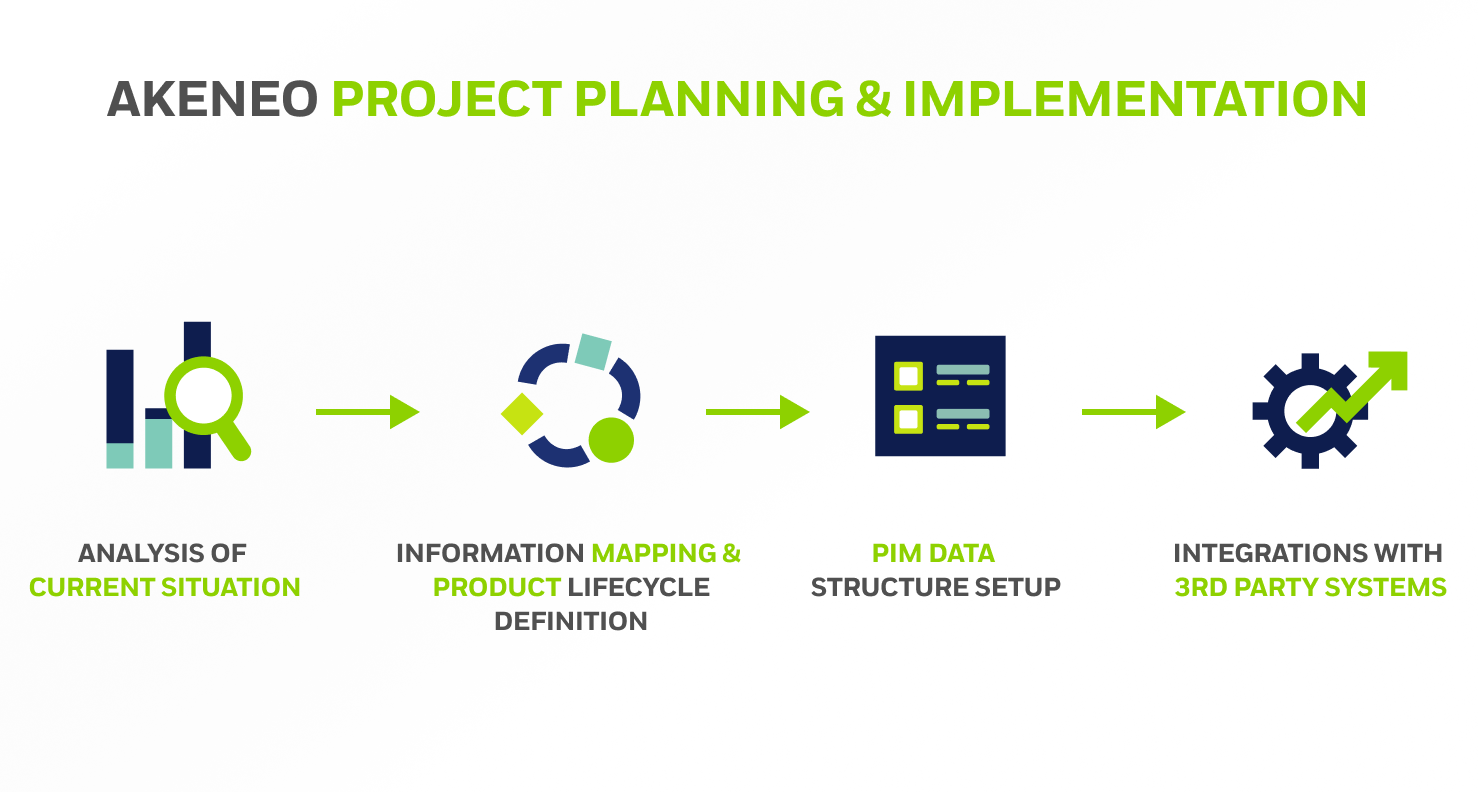
Evaluating current practices and understanding what is being done and how.
As the first step of the project, you need to identify – either on your own or with the assistance of Akeneo software consultants like us – the current product processes:
How is product information managed and enriched, and what is its scope?
What are the systems or channels involved, both inbound and outbound? It’s important to understand the starting point and each element available from the outset of the project.
Utilizing as much necessary information as possible, at i4, for example, we assist clients by proposing a scheme that accommodates all components related to product information.
For instance, some companies have both eCommerce and ERP software but lack a PIM. Many of them manage the catalog directly in the eCommerce platform, either manually or through spreadsheets. In such cases, we provide an ecosystem that integrates each of these three components. This approach leverages existing resources, automates tasks, reduces human errors, and amortizes the infrastructure cost.
Another common example is clients with multiple sources of product information and too many people spending excessive hours gathering all the necessary information. The goal in this case couldn’t be clearer: to have a consolidated master catalog managed from a single location.
Therefore, in this step, it’s necessary to establish the possible scenarios and points of action required.
As the first step of implementation, the product life cycle is determined. At this point, it’s necessary to know where it comes from, who enriches it, and the scope or extent to which it reaches. Here, essential basic interactions are determined, including each of the departments involved, existing systems, supplier information, responsibilities, etc. Once this has been achieved, the product life cycle can help dictate the next steps for configuring and implementing the PIM.
In this phase, the PIM team, guided at all times by Akeneo experts, identifies and builds the elements that will shape the master catalog. Next, they prepare the groundwork to receive the information that will shape any product present at the time of analysis. The following elements are typically identified:
Once the PIM structure is clearly defined and Akeneo is configured according to the client’s needs, a strategy must be defined to gather all possible product information.
In general terms, in Akeneo, we can create products in three ways:
Through Akeneo’s powerful and comprehensive web API, virtually any integration you can imagine is possible out of the box. This means that the PIM has countless possibilities to integrate into your company’s ecosystem, regardless of the business solution.
Akeneo has been created from an API-centric perspective, making it easier to integrate your PIM with any system you are currently using or considering introducing.
From ecommerce, such as integrating Akeneo with Magento or Akeneo with Shopware, to ERP systems, printing systems, B2B portals, and much more, whatever your needs may be, you can be sure that Akeneo PIM will fit perfectly into your current ecosystem and unlock future growth thanks to its extensive network and tailor-made PIM integrations.
During the analysis phase, it’s important to identify the needs that may arise or benefit from integration with other systems in the organization, paving a clear path to facilitate these integrations in the future.
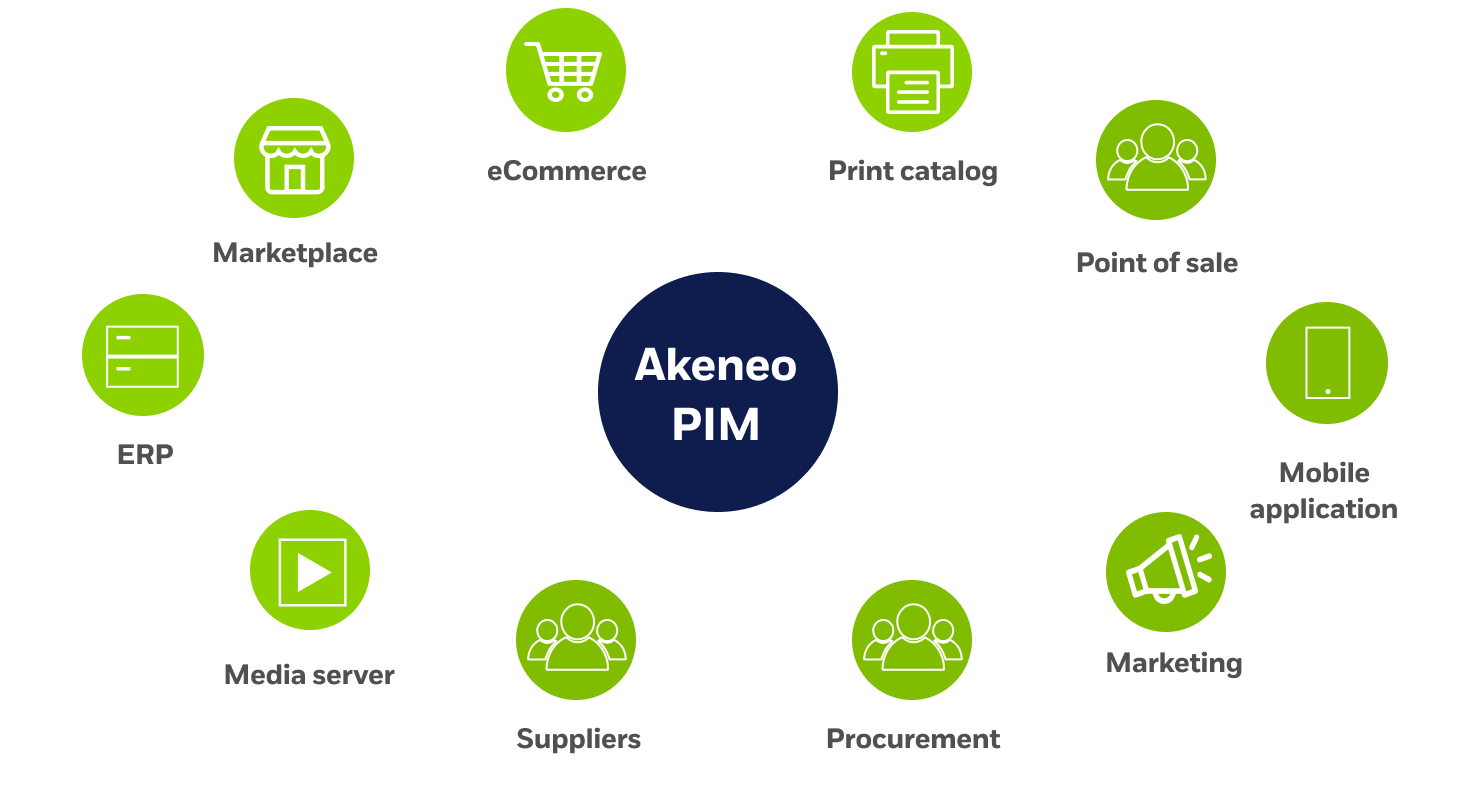
Akeneo offers a wide range of plugins that can connect with other well-known tools in the market, such as Magento. If a connection with Magento is essential for you, it’s crucial to ensure strong and consistent connectivity and conduct tests to ensure its proper functioning.
If integration with other systems has been carried out through a custom development plan, platform, or consulting firm, tests should also be conducted to ensure the integration functions correctly and that the results meet expectations.
For more information on implementing Akeneo in your business, or to learn more about the perfect PIM setup for your organization, please contact us through the following form. We’ll be happy to set you on the path to growth through a well-orchestrated PIM implementation.