

Over the last few years, businesses of all sizes have realized the importance of social media marketing. As a result, they’ve focused part of their efforts on this channel, convinced of the need to be there if they want to garner a return on investment. It’s an investment that requires human resources, technology, and time. Social Media Marketing has experienced significant growth in the last decade, and the interaction between brands and customers is closer than ever before, and as a consequence, even more demanding. One of the latest additions is the emergence of the IG Shopping app that allows Instagram users to buy products directly on the platform.
Statistics showed that 32% of Spanish consumers would search on social media before Black Friday, making promotions on these channels vital for driving conversions. But how? When it comes to determining how to quantify social media ROI, in contrast to other tactics, we measure it based on the impact social media generates instead of a direct monetary amount. Some experts say that we’re getting closer to discerning the “measurable” ROI.
According to an MDG Advertising study:
However, many CMOs and social media experts face a problem: they don’t know how to measure social media ROI for their business:
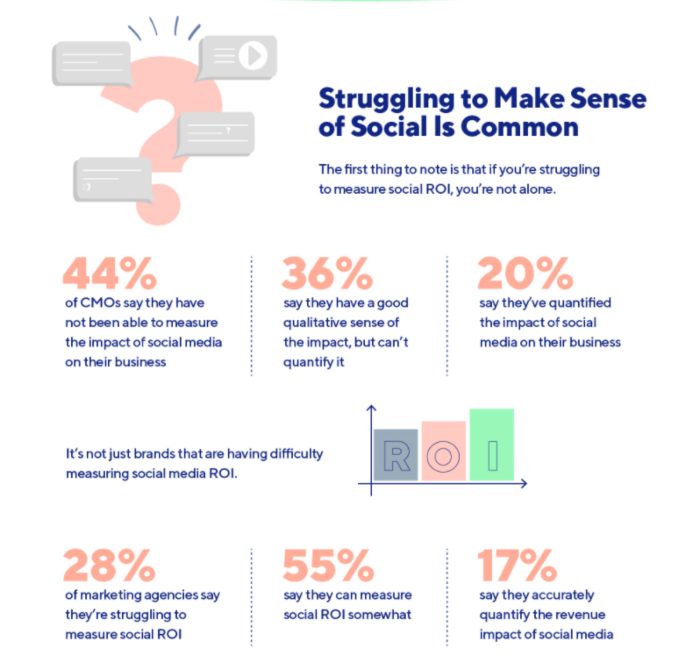
If you think you’re having trouble in determining how to quantify the ROI of your social media strategy, know you’re not alone! In this article, we’ll break down the keys to detect your KPIs and figure out if your social media marketing investment is bearing fruit.
Every business has its own set of goals making its definition of ROI different. Every enterprise must lay out their plans before they deploy any 360° marketing campaign on social media. What are your goals? Some ideas include:
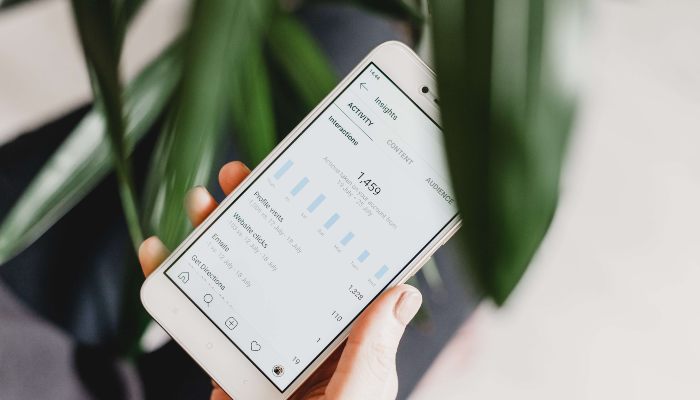
Examining your social media campaigns’ metrics will help you know your actions’ scope, and the ROI obtained. In short, the success of your social marketing depends on:
Every social network has its strengths. Evaluate each campaign frequently to find out what platform is helping to achieve sales and marketing goals.
Social networks help drive traffic to your site, but what we’re looking for is conversion. Do your visitors become real customers?
Watch the amount of time it takes for a social media opportunity to become part of the sales cycle. Understanding the process and knowing which social campaign and content are helping is the key to achieving higher conversion rates.
Explore how users behave in your social networks: where they access from, when, how long they stay on your site, what kind of content generates more traffic, etc.
Different organizations and campaigns will have their own conversion goals in social networks, although the ultimate goal is always to be part of a measurable action with monetary value. Here are some examples of these actions:
The way to track conversions in social networks will vary depending on the platform (Facebook, Twitter, Instagram, etc.), the objectives we pursue, and the budget. There are a series of variables that you must take into account to a greater or lesser extent, depending on your campaign, and these would be the main ones:
Using historical data (if you know the value of each customer’s duration, determining the conversion value is easy) and, through experience and common sense, if you don’t have the historical information on hand.

Collect your site’s traffic and conversion figures and create a spreadsheet that correlates the data to the total monetary value the conversions represent.
One of the areas where measuring profits can be more difficult is in influencing marketing. Running campaigns in collaboration with influencers is a very beneficial strategy if you choose your allies well and design an effective campaign, but how do we calculate success? We recommend you to choose three critical KPIs and focus only on them. Some of the indicators you will be most interested in are the volume of publications, comments, the average number of engagements, the reach, the impressions, and the number of new followers you receive. There are some tools out there to help you track metrics, such as Heepsy, Brandwatch, LinkedIn Social Selling, or Buzzmonitor; try them and keep the one that works best.
It is the sum of promotional accounts, labor costs, and miscellaneous expenses for each social network.
ROI = (NET PROFIT – COST OF THE INVESTMENT) / INVESTMENT X 100
Use the data from steps 4 and 5 to calculate the networks’ social network ROI.
Jill Konrath, an expert in digital marketing strategies, once said, “Marketers who have adopted social media in their strategies are creating new opportunities that traditional sales channels completely lack. It’s about taking advantage of all the tools we have at our disposal today.”
Make changes! Identify the metrics with the worst performance figures and take action to improve results:
If you manage to check what changes have taken place in your company since you dabbled into social media, you’ll better understand what works and what does not work in your strategy. But always keep in mind the most crucial thing: there’s no ROI without the right metrics.