

Email marketing was one of the first forms of publicity and lead acquisition after the internet appeared. Gradually, it evolved and improved the possibilities that are offered to companies, thanks in large part to all the technological advances. Email is the channel that we use, through email marketing campaigns, to be able to reach both existing clients and prospective clients with information about our business’ products or services, offers, promotions, get feedback from them, create a better relationship with them that is increasingly closer, and be loyal to our brand.
The ability to personalize email marketing, adapting it to the needs of our databases, amplifies these possibilities. In addition, being able to analyze and complete reports about clients’ behaviors is a very valuable opportunity to know our leads better and adapt ourselves to them.
How is content email marketing relevant today? This data shows how:
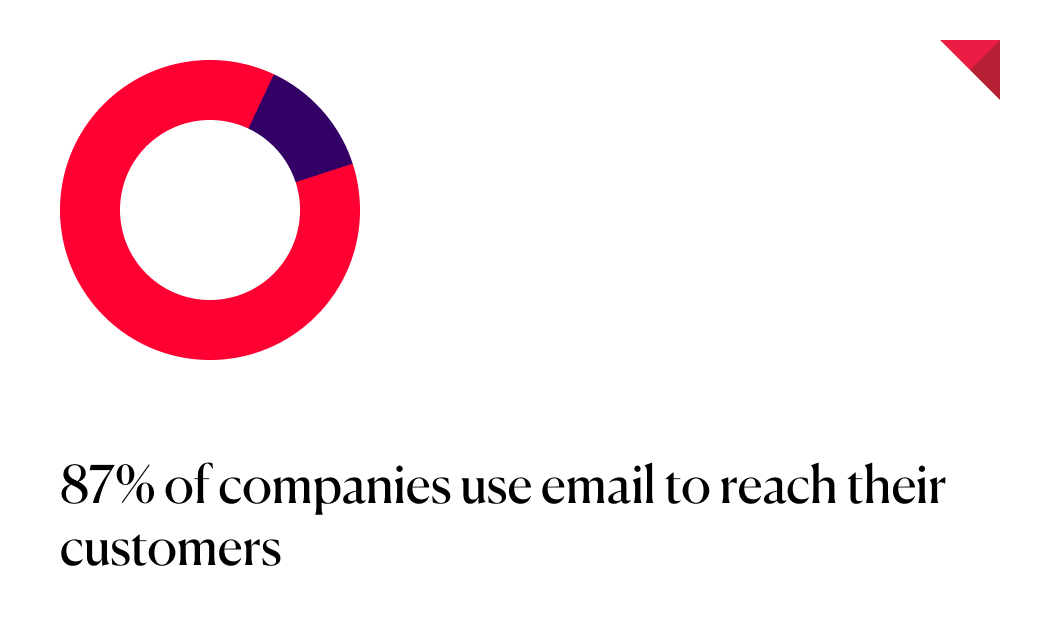
To be able to put email marketing tools into action, we need to already have our database: the list of contacts that want to get to know our product. We aren’t talking about big multinational companies (at least not just them), but both a SME and a big company can (and should) use this form of communication. Email marketing guarantees a positive ROI for our 360º marketing strategy.
The goal of email marketing programs is two-faceted:
Consult this list about the advantages of using email as a tool for your content marketing. It will help you understand (and convince you?) of the possibilities that are in your company’s reach.
We’re going to pause for a second in the technological part and in the solutions that we can find to carry out these campaigns.
There are many types of software that help us create marketing campaigns through email. Choosing the best email marketing tools is hard, and it will depend on your specific needs, but a complete and very useful technological solution is Salesforce.
Salesforce is a platform based in the cloud that manages client relationships and in just one platform, unites the needs of the marketing, sales, customer service, and e-commerce departments with respect to clients. Focusing on the area of digital marketing, the possibilities of Salesforce are infinite: it allows us to focus our databases according to the level of interest a lead has in our product, which makes our campaigns and actions more effective.
With Salesforce Customer 360, for example, we have an omnichannel experience that connects the different Salesforce sales applications (Commerce Cloud), marketing (Marketing Cloud), and customer service (Service Cloud), in addition to other external apps. The result allows us to combine all registers of a person in the different systems to get to know them better. A practical example: we are going to know what items were saved in the “shopping card” of an online site that a person didn’t end up buying and from that, we will be able to carry out email marketing actions that push us to that acquisition.
Another interesting application of Salesforce for email marketing is Email Relay, an application to prevent your emails from reaching the Spam folder of your clients and potential clients, and then ensure a better visibility for your campaigns. Email Relay also helps us avoid identity theft and phishing attacks, storing copies of our emails and checking that they are safe.
Email Connector is also very useful. It’s as simple as linking all the accounts that your company uses to Salesforce to centralize the data collected, files, and actions to then optimize time and resources. For these and many other options, Salesforce is a good choice for your email strategy.
To sum it up, carrying out an email marketing campaign is the quickest and easiest way (and definitely most economical) to reach your public, create an impact on them, and ensure that their opinion of your brand is positive. It’s the first step towards your actions turning into sales. And that’s what we’re looking for! Find out what is the best email marketing for you and bet on it.